
Planning a trip to Crystal River, Florida? You’re in for a delightful experience! This picturesque coastal town is famous for its sparkling clear springs and the gentle giants that inhabit them – manatees. Crystal River remains the sole location in Florida where you can legally swim alongside these amazing creatures, making it an essential spot for wildlife lovers.
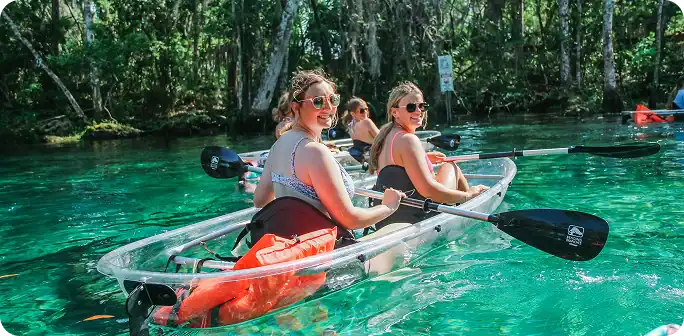
Whether you’re interested in joining a manatee tour, paddling through Three Sisters Springs by kayak, or touring the Crystal River National Wildlife Refuge, you’re guaranteed to create lasting memories with these extraordinary marine mammals. To truly immerse yourself in the local marine life, you might want to book a clear kayak manatee experience that lets you glide over the crystalline waters and observe these serene creatures in their natural habitat. In this article, we’ll explore ten fascinating facts about manatees in Crystal River that will enhance your understanding and appreciation of these incredible animals, enriching your visit to this distinctive Floridian destination.
Distinctive Physical Characteristics and Behavior
1. Manatee Lungs: Built for Buoyancy
Manatees have uniquely adapted lungs that extend along nearly the entire length of their bodies, unlike most mammals whose lungs are concentrated in the chest. These large, elongated lungs help manatees control their buoyancy with remarkable precision, allowing them to glide effortlessly through the water. By adjusting the amount of air in each lung independently, manatees can stay level in the water without constant effort, conserving energy as they search for food or rest just below the surface.
2. Whiskered Muzzles
A prominent feature of manatees is their whiskered muzzles. These whiskers, known as vibrissae, serve a functional purpose beyond aesthetics.
Each vibrissa is individually connected to nerve endings and has its own blood supply, granting them exceptional sensitivity. This trait helps manatees navigate through murky waters and accurately locate food, compensating for their comparatively limited vision.
3. Unique Dental Structure
Manatees have a distinctive dental arrangement among mammals. Their teeth, often called “marching molars,” are continuously replaced. New molars develop at the back of the jaw and slowly move forward as older teeth wear down and are lost.
This perpetual tooth replacement is a clever adaptation to their rough diet of thorny aquatic vegetation, frequently mixed with sand. Interestingly, this dental conveyor belt mechanism resembles that of elephants, though manatees have an endless supply of new molars, unlike their land-based relatives.
Reproduction and Lifespan
4. Extended Gestation and Sparse Births
Manatees experience a surprisingly lengthy gestation period for their size. A female manatee carries her calf for about 12 to 14 months before giving birth. This prolonged pregnancy is followed by an equally extensive period of maternal care.
After birth, a calf remains with its mother for up to two years, acquiring essential survival skills and feeding behaviors. This extended dependency, coupled with the fact that females typically give birth only every two to five years, results in slow population growth. This reproductive approach makes manatees especially susceptible to population declines and highlights the significance of conservation initiatives in areas like Crystal River, Florida, where these gentle giants are safeguarded.
5. Remarkable Longevity
Despite facing numerous challenges in the wild, manatees can achieve impressive lifespans. Under ideal conditions, these marine mammals can live up to 60 years or more.
However, this potential is often unmet due to various threats, both natural and anthropogenic. Notably, manatees in captivity have been documented to live longer than their wild counterparts. A notable example is Snooty, a captive manatee who reached the remarkable age of 69, becoming a cherished ambassador for his species.
This unexpected longevity underscores manatees’ resilience and highlights the positive influence that protected environments, such as those within the Crystal River National Wildlife Refuge, can have on their health and lifespan.
Ecological Role and Conservation
6. Climate Indicator Species
Manatees act as indicator species for the well-being of marine ecosystems, particularly in the context of climate change. These gentle giants are highly responsive to temperature variations, making them excellent gauges for environmental changes. Manatee behaviors and distributions can offer valuable insights into broader impacts on aquatic habitats as climate patterns shift.
For example, alterations in manatee migration routes or unusual gatherings at warm water refuges can indicate changes in water temperatures or seagrass availability, alerting scientists to potential ecosystem-wide effects.
7. Significance of Warm Water Refuges
Warm water refuges are essential for manatee survival, especially during colder periods. While natural springs have always been important, power plant outflows have become significant warm water sanctuaries for manatees. Approximately 60% of the manatee population is estimated to rely on these industrial warm water sources during winter.
This dependence presents a complex conservation issue, as the eventual shutdown of these power plants could drastically affect manatee populations. Conservation efforts are now concentrating on developing strategies to transition manatees back to natural warm water habitats, such as springs and thermal basins, to ensure their long-term survival.
8. Impact of Conservation Initiatives
Conservation programs have made substantial progress in protecting manatees in Crystal River and across Florida. These initiatives include the creation of manatee protection zones, implementing boat speed regulations, and public education campaigns.
Consequently, the manatee population has exhibited signs of recovery over recent decades. Nonetheless, ongoing challenges like reducing seagrass habitats and unprecedented mortality events emphasize the continuous need for conservation efforts. The U.S. Fish and Wildlife Service’s proposal to designate nearly 2 million acres as critical habitat for manatees represents a promising move toward ensuring the enduring survival of these beloved marine mammals. These conservation measures benefit manatees and enhance the overall health of Florida’s aquatic ecosystems.
Risks and Threats
9. Susceptibility to Cold Stress
Although manatees may seem hardy, they are surprisingly sensitive to cold temperatures. When water temperatures fall below 68°F (20°C), manatees can develop a potentially life-threatening condition known as “cold stress syndrome.”
This syndrome is hazardous for younger manatees and can occur even in Florida’s warm waters. Cold stress can trigger physiological issues, including reduced metabolism, digestive problems, and a compromised immune system. Manatees may suffer from skin lesions, abscesses, and pneumonia in severe cases.
To mitigate this threat, manatees often seek out warm water refuges, such as natural springs or warm water outputs from power plants. However, relying on artificial warm water sources introduces additional challenges for long-term conservation efforts.
10. The Ongoing Issue of Boat Strikes
One of the most enduring dangers to manatee populations is the risk of boat collisions. Recent research has uncovered a startling finding: 96% of adult Florida manatees have scars from boat strikes, with one in four being hit by boats ten or more times. These repeated injuries not only cause immediate pain and stress but can also lead to long-term health issues and impaired mobility.
Scientists have noted a worrying increase in boat-related manatee strandings in Belize, rising from 1-4 per year in the late 1990s to 10-17 per year by the late 2010s. This rise aligns with the growth of tourism and the corresponding increase in boat traffic. The problem is worsened by manatees’ difficulty in detecting approaching boats, especially those with low-frequency engine noises.
To tackle this issue, conservation efforts focus on establishing more protected areas with restrictions on boat traffic and enforcing speed limits in shallow seagrass regions where manatees commonly feed.
Conclusion
Manatees in Crystal River, Florida, are extraordinary creatures facing many challenges. From their unique physical adaptations like continuous tissue renewal and specialized teeth to their essential role as climate indicators, these gentle giants continue to fascinate and inspire. However, their vulnerability to cold stress, boat collisions, and habitat degradation highlights the critical need for ongoing conservation initiatives.
As visitors to Crystal River, we have the power to make a positive impact. By respecting manatee habitats, adhering to boating regulations, and supporting local conservation projects, we can help secure the future of these incredible marine mammals. Let’s collaborate to protect manatees and preserve Crystal River’s natural beauty for generations to come.
FAQ
What makes Crystal River, Florida, a prime location for manatee sightings compared to other areas like Clearwater?
Crystal River stands out for manatee sightings due to its consistently warm spring-fed waters, which are available year-round. These waters offer a sanctuary for manatees during the cold winter months. Additionally, unlike locations such as Crystal River, they provide a unique opportunity to swim alongside manatees in their natural environment.
Are manatees in Crystal River, Florida, endangered, and what conservation efforts are in place to protect them?
Florida manatees, including those in Crystal River, are classified as threatened rather than endangered. Conservation measures include enforcing boat speed zones, rescuing distressed manatees, and safeguarding warm-water habitats.
The U.S. Fish and Wildlife Service also considers expanding protected habitats to address pollution and loss.
How do guided tours in Crystal River contribute to a safe and respectful manatee viewing experience?
Guided tours in Crystal River ensure a safe and respectful manatee viewing experience by providing comprehensive pre-tour education, utilizing passive observation techniques, and taking necessary precautions to protect manatees. Tours are led by knowledgeable guides emphasizing responsible interactions with these marine mammals.
What are some key differences between manatees in Crystal River and those found in other parts of Florida, such as Clearwater?
What are some key differences between manatees in Crystal River and those found in other parts of Florida, such as Clearwater? Manatees in Crystal River are predominantly West Indian manatees, attracted by the river’s consistently warm temperatures from springs, creating a unique habitat. In contrast, manatees in other regions like Clearwater may not have the same level of temperature stability, often leading to seasonal migrations.
(I don’t think this section is factual. Here is a link with info https://www.naturesadventurecenter.com/post/why-manatees-clearwater-fl-are-so-interesting) (Manatees in Crystal River and clearwater manatees are not different. Clearwater is only 1-hour dive. We just have a lot of manatees during the wintertime because they need the warmth of the springs).